CSU Engineering First Semester: What It’s Actually Like
A CSU mechanical engineering student explains what first semester is really like: ENGR 111, MATLAB, Arduino, the math load, and which clubs to join.
I’m a mechanical engineering student at Colorado State, and my first semester of CSU engineering looked nothing like what I’d pictured.
In my head, I’d walk into class and start learning equations, writing code, wiring Arduinos and building robots. That’s the version of mechanical engineering you see online. What I actually got was a slow, wide-open class where civil, chemical, electrical and mechanical majors all sat together and spent the first few months learning what each kind of engineer does.
That gap isn’t a bad thing. But nobody explained it to me ahead of time, so I’m explaining it to you.
Below is how CSU’s first-year engineering course works, how hard it really is, where the math actually shows up, and what I’d do in your first semester knowing what I know now.
How CSU’s first-year engineering course works
Every engineering major at CSU starts in the same intro course: ENGR 111, Fundamentals of Engineering. It doesn’t matter if you’ve known you want to be a mechanical engineer since middle school. You take the exploratory version with everyone else.
That was the biggest surprise for me. I’d expected to dive straight into my major, the way I assumed it worked at CU Boulder and other Colorado schools. Instead, the class mixes every discipline in one room.
For the first few months, each unit covers a different kind of engineering. You get a feel for what civil, chemical, electrical and mechanical engineers actually spend their days on.
If you’re undecided, this is great. If you’re already set on your major, it can feel like a detour. I’d treat it as a free look at fields you’d never sit in on otherwise. Most real projects need more than one kind of engineer anyway.
In spring, CSU’s mechanical engineering flowchart moves you on to ENGR 114, Engineering for Grand Challenges.
The Friday projects and the slow start
Every Friday, we did a small hands-on project tied to whatever discipline we’d covered that week. They were simple. Think quick, low-stakes builds, not robots.
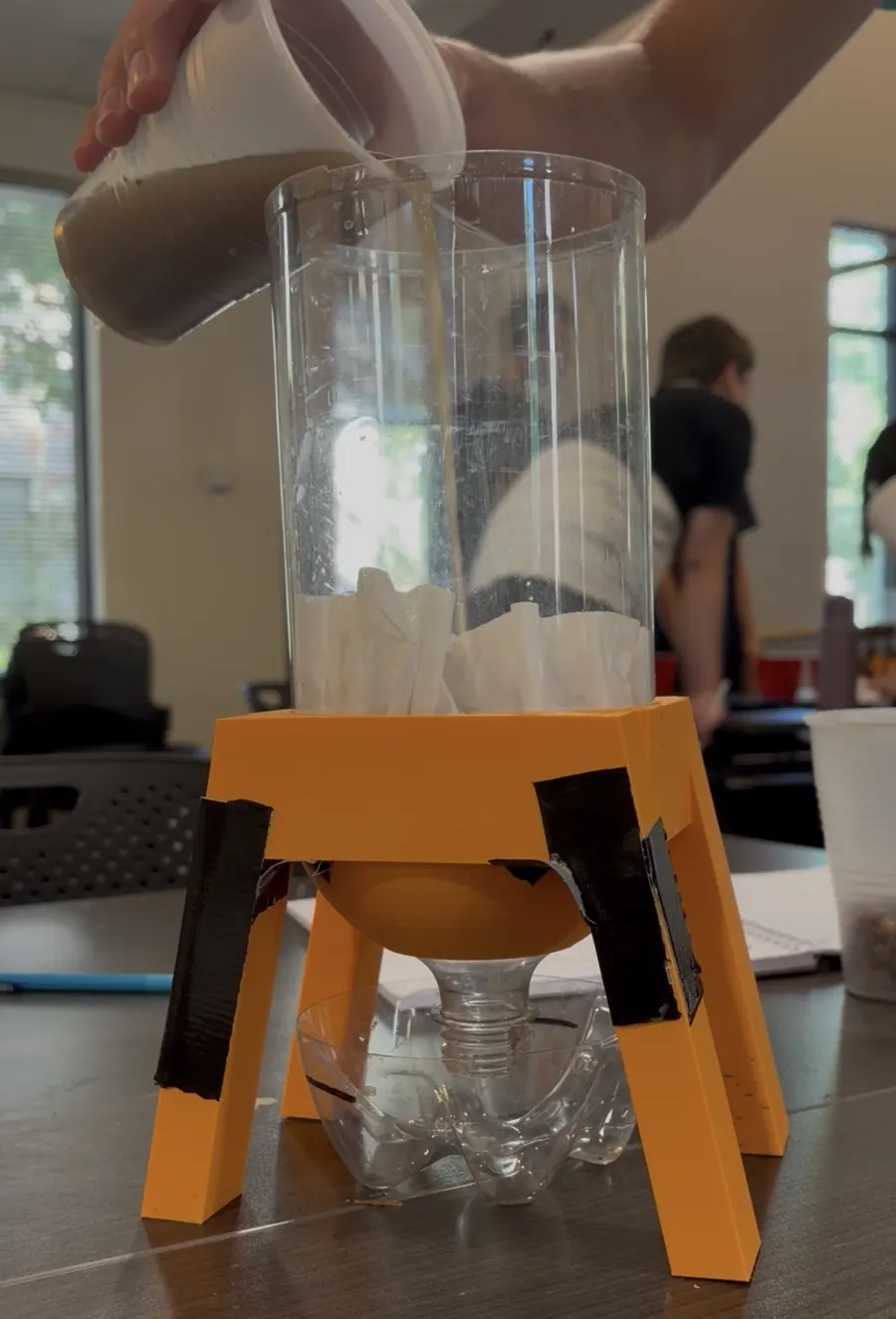
One week, we built a small wind turbine with cardboard blades and tested it in a wind chamber. Another week, for environmental engineering, we made a water filter out of different earthy, natural materials. Nothing fancy, but each one gave you a quick feel for what that field actually does.
The first stretch of the semester moves slowly. There’s less math and fewer equations than most people expect from an engineering class. If you show up ready to grind problem sets, the early weeks might feel almost too easy.
Don’t take that as a preview of the whole degree. It’s a warm-up.
When it picks up: MATLAB and Arduino
The class finally clicked for me when we got our Arduino kits and opened MATLAB. That’s when it started to feel like the engineering I’d signed up for.
In MATLAB, we coded simple games. With the Arduino kits, we worked through basic skills, the starter circuits and short programs that bigger projects build on. None of it is advanced. But it’s the first time in the class that you make something work yourself.
If you’ve never coded, don’t stress. The class starts from zero. If you have, this is where you’ll pull ahead, and you can help the people around you catch up.
How hard is CSU engineering first semester?
Honestly, the engineering class itself was easy. It almost felt like an optional elective. The tests were very manageable, and the math in ENGR 111 was limited. You don’t need calculus to do well in that course.
Here’s the catch: ENGR 111 isn’t your whole schedule. First semester, engineering students also take General Chemistry (CHEM 111) and a math class. That math class depends on your placement. You can be in precalc and still take ENGR 111 at the same time. The mechanical engineering flowchart shows the fastest path, starting at Calculus I (MATH 160).
Which math class you start in depends on the Math Placement Tool, which incoming engineering students take before orientation.
So the math is real. It just lives in your math and chemistry classes, not in the intro engineering course. Plan your study hours around those.
Join a club your first semester
The best thing I did my first semester was join two engineering clubs: Baja SAE and the FSAE EV team.
Baja teams design and build a rugged off-road vehicle for SAE’s student competitions. Ram Racing is CSU’s Formula SAE team. It runs both a combustion car and an electric car, and it’s open to all majors and experience levels.
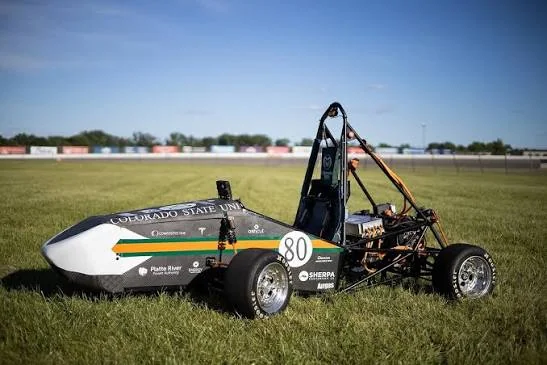
Both are big teams with real projects. That matters in a semester where your classes are still slow. It’s also how you meet older, more experienced engineers, which you don’t get in a room full of first-years.
You don’t need experience to join. Go to the first meetings, pick a sub-team that sounds interesting, and keep showing up. Team builds run on planning as much as skill, which is something I wrote about in what 4 years of NASA HUNCH taught us.
What to do in your first semester
- Take math placement seriously. It decides where you start, and calculus sets your pace for the next two years. If you’re rusty, CSU runs a summer program called ENCourage Engineering Math that reviews pre-calc.
- Use the easy weeks. When ENGR 111 is slow, put that time into math and chem instead of coasting.
- Pay attention outside your major. You might find a field you like more. Switching is easiest early, before your schedule splits off.
- Get comfortable with MATLAB and your Arduino kit. They come back. On the ME flowchart, ENGR 111 is a prerequisite for the second-year experimentation course (MECH 231).
- Join a club in the first few weeks. Baja, Ram Racing or anything else that builds something physical.
- Find the Engineering Success Center. It’s on the first floor of the Scott building and handles advising, career support and scholarships.
If a club project or a big class assignment feels like too much at once, break it down the way I describe in How to Turn a Big Goal Into a Step-by-Step Plan.
Common mistakes in your first semester
- Assuming the whole degree will be this easy. The flowchart puts statics and Calculus II in spring. It gets heavier from there.
- Tuning out the disciplines that aren’t yours. Mechanical engineers work next to electrical and civil engineers all the time. Those weeks teach you how they think.
- Waiting to join a club until you “know enough.” The club is where you learn it.
- Keeping your plan in your head. Between ENGR 111, math, chem, labs and club meetings, deadlines pile up quietly. Write them down in one place.
Doing it in Flowboard
First semester is mostly about keeping a lot of small things moving at once. Here’s how we’d set it up in Flowboard: one board for the semester, with a step for every exam, lab and club deadline. It’s the same way we plan engineering projects.
- Lay out each class and club as steps on a visual project plan, each with a due date and status.
- Check the automatic project timeline so a heavy week doesn’t sneak up on you.
- Use gates for work that depends on something else, like a club design review that can’t start until your part is modeled.
- Attach MATLAB files, lab write-ups and notes to the right step with project documents.
If that sounds useful, you can try it free for 7 days at flowboard.design/register.
Frequently asked questions
What classes do CSU engineering freshmen take first semester?
Most CSU engineering freshmen take ENGR 111 (Fundamentals of Engineering), a math class based on placement, a science class and a core requirement. In practice, that usually means ENGR 111, General Chemistry (CHEM 111) and a math class anywhere from precalc to Calculus I. Your exact schedule depends on your major and math placement.
Is the first semester of engineering at CSU hard?
The intro engineering course at CSU usually isn’t hard. In my experience, ENGR 111 felt close to an elective, with manageable tests and very little math. The real difficulty in first semester comes from your math and chemistry classes, which you take at the same time. Plan your study hours around those.
Do you need calculus for ENGR 111 at CSU?
No, you don’t need calculus to do well in ENGR 111, because the course uses very little math. You can even take it while you’re still in precalc. Calculus comes soon after, though, and later engineering courses build on it. Your starting math class is set by the Math Placement Tool, which you take before orientation.
What engineering clubs should a CSU freshman join?
The best club for a CSU engineering freshman is one that builds something real, like Baja SAE or Ram Racing’s Formula SAE teams. Ram Racing runs both combustion and electric cars and is open to all majors. Teams like these give you hands-on work early and connect you with experienced upperclassmen.
Do all CSU engineering majors take the same first-year class?
Yes, every CSU engineering major starts in ENGR 111, Fundamentals of Engineering, even if you’ve already picked your discipline. The class mixes all majors and spends its first few months introducing each type of engineering. On the standard plan, ENGR 114, Engineering for Grand Challenges, follows in the spring semester.